
« HOME « VIEW ALL DESTINATIONS
CANYONLANDS NATIONAL PARK HIKING TOURS
 UTAH, USA
Our expert guides will lead you on the best trails in Canyonlands National Park!

Our expert guides will lead you on the best trails in Canyonlands National Park! Our Canyonlands National Park hiking trails include stunning views of the iconic rock formations, and breathtaking vistas.
Endlessly sprawling canyons. Mythical, needle shaped towers of rock. In this remote and intriguing wilderness, high plateaus, buttes, and mesas are in sharp contrast to the life-giving waterways and their green banks deep below. Carved out by the Green and Colorado rivers over millions of years, Canyonlands National Park spreads out over 257,640 acres to protect awe-inspiring, desolate desert terrain just outside of Moab, Utah.
If you feel the call to witness such a unique landscape, let us guide you on a multi-day tour that will have you looking over it all from the park’s Island in the Sky district. We offer both camping and lodging based itineraries, where you can experience Arches, Capitol Reef, Bryce Canyon, and Zion National Parks too! Hiking in Canyonlands National Park is an unforgettable experience, with trails ranging from easy to strenuous and providing stunning vistas at every turn. We offer guided hikes for all skill levels, as well as interpretive walks where you can learn about the park’s geology and history.
ALL CANYONLANDS HIKING TOURS
Utah Mighty 5
Lodging Adventure
Explore Utah's Mighty 5 National Parks in five days on our flagship lodging adventure.
Utah Mighty 5
Camping Adventure
Sleep under Utah's desert stars as you hike all five National Parks on this five-day camping journey.
Ultimate Utah Mighty 5
Classic or Premium Lodging
Hike all five of Utah's Mighty 5 National Parks and choose your lodging style on this seven-day adventure.
For private groups of 8 or more
Arches + Canyonlands Weekend
Lodging Adventure
Hike Arches & Canyonlands, visit Dead Horse Point, and relax at the charming Moab Springs Ranch.
For private groups of 8 or more
Arches + Canyonlands
Camping Adventure
Spend five days hiking Arches, Canyonlands, and Moab's hidden gems.
For private groups of 8 or more

Why book a guided hiking tour to Canyonlands?

Canyonlands hiking tours offer a unique and unforgettable experience for visitors of all ages and skill levels. Here are some reasons why booking a guided hiking tour to Canyonlands National Park is the best way to explore this stunning destination:
- Expert Local Guides: Our guides are knowledgeable about the park’s history, geology, and wildlife, providing you with an in-depth understanding of your surroundings. They also know the best Canyonlands hiking trails and viewpoints, ensuring that you make the most out of your trip.
- Safety First: Hiking in Canyonlands National Park can be challenging, especially for first-time visitors. Our guides are trained in wilderness first aid and have extensive knowledge of the terrain, making sure that you stay safe throughout your hike.
- Eco-Friendly Practices: We are committed to preserving the natural beauty of Canyonlands National Park. Our guides follow Leave No Trace principles, and we encourage our visitors to do the same. By minimizing our impact on the environment, we can ensure that future generations will also be able to enjoy this stunning landscape.
- Community Involvement: We believe in giving back to the community and supporting local businesses. That’s why we partner with small, locally-owned companies for services such as transportation and accommodations. This not only helps support the local economy but also allows us to provide you with an authentic experience of Canyonlands.
Each tour is great for couples, families, and solo travelers alike
More Information about Canyonlands
Canyonlands National Park, located near Moab, Utah, is a vast and rugged wilderness area that is home to a rich and diverse array of geological features, flora, and wildlife. The park was established in 1964, and today it covers over 337,000 acres of land, making it one of the largest national parks in the United States.
The history of Canyonlands National Park is deeply intertwined with the history of the Native American peoples who have lived in this region for centuries. The park is home to many ancient rock art panels and other cultural sites that attest to the long and varied history of human habitation in this area.
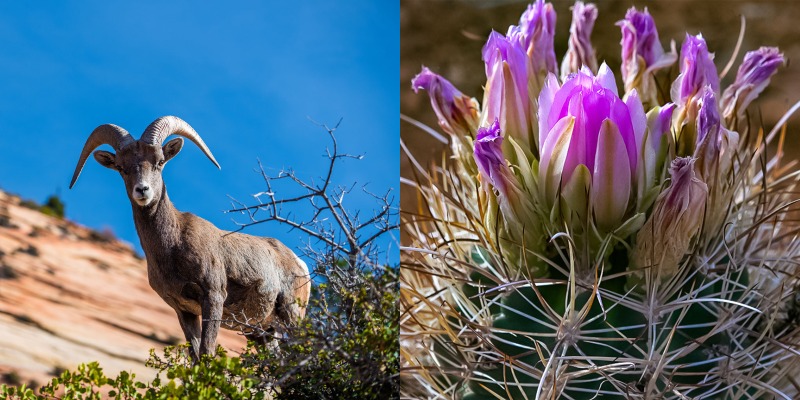
Some of the specific wildlife you might see while visiting Canyonlands include Desert Bighorn Sheep and Coyotes. The Desert Bighorn Sheep are majestic animals that are well adapted to the park’s arid climate and can often be seen clambering up rocky cliffs and slopes in search of food. Coyotes are intelligent and adaptable carnivores that can be found throughout the park, where they hunt small mammals and scavenge for food. They are often seen in the early morning and evening hours and are known for their distinctive howls. In terms of trees, you might see Pinyon Pines, Junipers, and Cottonwoods in Canyonlands. Pinyon Pines are small, bushy trees that are common in the park and are known for their distinctive pinecones, which contain edible seeds. Junipers are evergreen trees that are also common in the park and are known for their fragrant, berry-like cones. Cottonwoods are large deciduous trees that are found along the park’s rivers and streams, where they provide shade and habitat for a wide range of animals. They are known for their distinctive, cottony seeds, which are produced in the spring. Some of the plants you might see in Canyonlands include Prickly Pear Cacti, Mormon Tea, and Rabbitbrush. The Prickly Pear Cactus is a distinctive plant with flat, pad-like stems and colorful flowers, and it is an important food source for a variety of animals. Mormon Tea is a small, shrubby plant that is found in dry, rocky areas of the park and is known for its distinctive, needle-like leaves. It has a long history of use as a medicinal herb. Rabbitbrush is a tall, shrubby plant that is common in the park and is known for its bright yellow flowers, which bloom in the fall. It is a popular food source for a wide range of animals.
The park is divided into four distinct districts: the Island in the Sky, the Needles, the Maze, and the Rivers District. We visit both Island in the Sky and The Needles District. Each of these districts has its own unique geography and geological features, ranging from the towering mesas of the Island in the Sky to the “Needle like” spires in The Needles District.
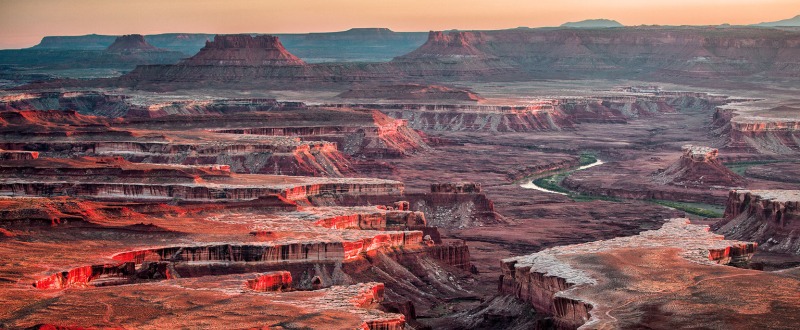
Island in the Sky District
Nestled atop the Colorado Plateau in Canyonlands National Park, Island in the Sky is a mesa that offers a bird’s eye view of the breathtaking landscape below. With deep canyons, towering spires, and other geological wonders, this spot is a paradise for hikers and rock climbers. There are several trails available for visitors to explore, including the popular Mesa Arch Trail, which offers a stunning view of the arch at sunrise, and the Grand View Point Trail, which takes hikers to the edge of the mesa for panoramic views of the surrounding area. Other notable hikes include the Whale Rock Trail, which features a natural rock arch, and the Upheaval Dome Trail, which leads to a mysterious circular depression that has puzzled geologists for decades. No matter which trail you choose, a visit to Island in the Sky is sure to leave you in awe of the natural beauty of Canyonlands National Park.
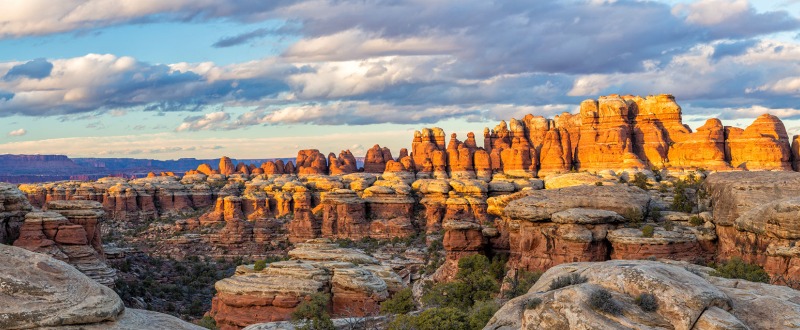
Needles District
The Needles District of Canyonlands National Park is a rugged and remote area known for its towering sandstone spires and colorful rock formations. Located in southeastern Utah, the Needles District is home to several popular hiking trails that offer visitors the chance to explore the park’s stunning landscape. Some of the trails available for hikers in the Needles District include the Elephant Hill Trail, the Chesler Park Loop, and the Joint Trail. The Elephant Hill Trail is a challenging route that leads hikers to the base of the park’s iconic spires, while the Chesler Park Loop offers a more moderate hike through a grassy meadow surrounded by towering sandstone cliffs. The Joint Trail is a strenuous hike that takes visitors through a series of narrow slot canyons and offers panoramic views of the surrounding landscape.
Average Temperatures + Precipitation for Canyonlands National Park
*Based on weather data from the National Park Service
| Month | High (°F) | Low (°F) | Precip (in) |
|---|---|---|---|
| January | 44 | 22 | 0.49 |
| February | 52 | 28 | 0.45 |
| March | 64 | 35 | 0.71 |
| April | 71 | 42 | 0.73 |
| May | 82 | 51 | 0.79 |
| June | 93 | 60 | 0.44 |
| July | 100 | 67 | 1.02 |
| August | 97 | 66 | 1.00 |
| September | 88 | 55 | 0.93 |
| October | 74 | 42 | 1.21 |
| November | 56 | 30 | 0.73 |
| December | 45 | 23 | 0.63 |
Why Choose Mountain Based
There are many tour companies to choose from when planning your trip to Canyonlands. So why should you choose Mountain Based? Here are a few reasons:
- Small Group Size: We keep our group sizes small, allowing for a more personalized experience and minimizing our impact on the environment.
- Unique Itineraries: Our itineraries are carefully designed to offer a unique and immersive experience. We go off the beaten path, giving our clients the chance to discover hidden gems and connect with local communities.
- Experienced Guides: Our Canyonlands hiking tour guides are highly experienced and knowledgeable about the destinations we visit. They prioritize safety while also sharing their expertise and passion for the outdoors.
- Flexible Options: We understand that everyone has different preferences when it comes to adventure travel. That’s why we offer flexible options such as customizing itineraries or providing alternative activities for those who may not be comfortable with certain activities.